What to Eat After Gallbladder Removal: A Practical Guide
Most people return to a balanced diet within weeks. Here is how to ease back in, which foods tend to sit well, and how to learn what suits you.
In this guide
- Why eating can feel different without a gallbladder
- The first days: two sensible approaches
- Foods many people find easy to tolerate
- Foods many people go slowly with
- How to eat: a few habits that help
- Adding fiber without the bloating
- A gentle sample day
- Learning what works for you
- Frequently asked questions
- Sources
Short answer: after gallbladder removal, most people can gradually return to a normal, balanced diet. Many find it easier to begin with smaller, lighter meals, go gently on greasy or very fatty foods, and add foods back one at a time. There is no single “gallbladder diet” that suits everyone, so your own experience and your care team’s advice matter most.
Key takeaways
- Many people are back to their usual foods within about a month, although some need to keep making small adjustments.
- Smaller, more frequent meals are often easier on digestion at first.
- Lean protein, cooked vegetables, fruit, oats, rice, potatoes and lower-fat dairy are commonly well tolerated.
- Greasy, fried and very rich foods are the usual troublemakers, but research on strict long-term low-fat rules is mixed.
- Add fiber gradually, drink enough fluid, and keep a simple food diary to spot patterns.
- Ask your doctor or a dietitian about symptoms that do not settle.
Why eating can feel different without a gallbladder
Your liver makes bile, a fluid that helps your body break down and absorb fat. The gallbladder used to store and concentrate that bile, then release it when you ate. Without a gallbladder, bile flows steadily from the liver into the small intestine instead.
Most people digest food perfectly well afterwards. The National Institute of Diabetes and Digestive and Kidney Diseases (NIDDK) notes that a small number of people have softer and more frequent stools because bile now reaches the intestine more often, and that this is usually temporary. Cleveland Clinic describes the body taking anywhere from a couple of weeks to a couple of months to adjust. For some people, very fatty meals or large portions are what make the difference.
If you want the full picture of what changes, see how digestion changes without a gallbladder.
The first days: two sensible approaches
Always follow the instructions your surgical team gave you. Beyond that, reputable sources describe two gentle ways to begin:
- The NHS advises eating a normal, healthy diet and says you may find it easier to eat small meals for the first few days.
- Cleveland Clinic describes a step-by-step approach: clear liquids and broths first, then soft, bland foods, then gradually more varied solid foods.
Both lead to the same place: light portions at the start, then a steady return to ordinary meals. Our guide to the first week after surgery has simple meal ideas for this stage.
Foods many people find easy to tolerate
These are common starting points, not rules. Everyone responds differently.
| Food group | Examples | Worth knowing |
|---|---|---|
| Lean protein | Skinless chicken or turkey, white fish, tofu, egg whites, well-cooked lentils | The NHS suggests grilling, baking, poaching or steaming rather than frying, and trimming visible fat and skin. |
| Fruit and vegetables | Bananas, melon, berries, peeled apples, cooked carrots, zucchini, spinach | Cooked and soft vegetables are usually easier than large raw salads at first. Beans and cruciferous vegetables can cause gas in some people. |
| Starchy foods | Oats, rice, potatoes, pasta, toast | The NHS suggests basing meals on starchy foods, choosing higher-fiber versions as you feel ready. |
| Dairy and alternatives | Skim or reduced-fat milk, low-fat yogurt, plant milks | The NHS notes skim milk has about half the saturated fat of 2% milk. |
| Drinks | Water, herbal or unsweetened tea | The NHS suggests 6 to 8 glasses of fluid a day, mostly water. |
Foods many people go slowly with
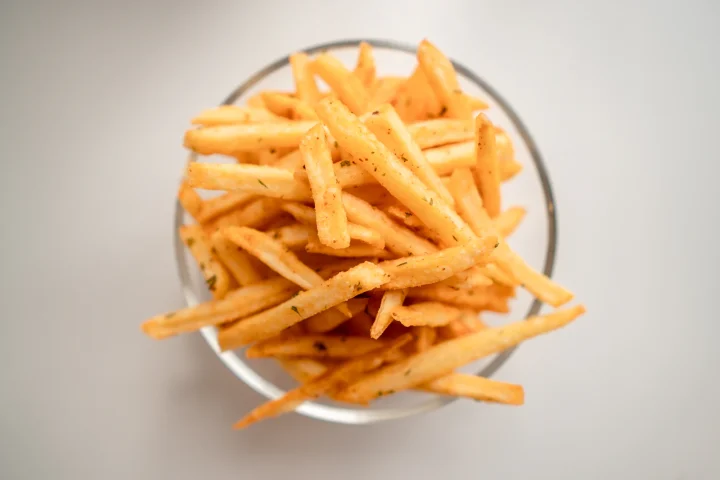
Fried and greasy foods, fatty cuts of meat, creamy sauces, pastries and very large meals are the most commonly reported triggers. Spicy foods, alcohol and caffeine bother some people too. We cover the full list, and gentler swaps, in foods to limit after gallbladder removal.
How to eat: a few habits that help
- Go smaller and more often. Cleveland Clinic suggests four to six smaller meals rather than three large ones.
- Spread fat through the day instead of having one rich meal, and notice how different amounts feel.
- Cook with less fat. Grill, bake, poach or steam. The NHS also suggests measuring oil with a teaspoon or using an oil spray.
- Eat slowly and stop when you are comfortably full.
- Drink regularly through the day, especially if you have loose stools.
Practical tip
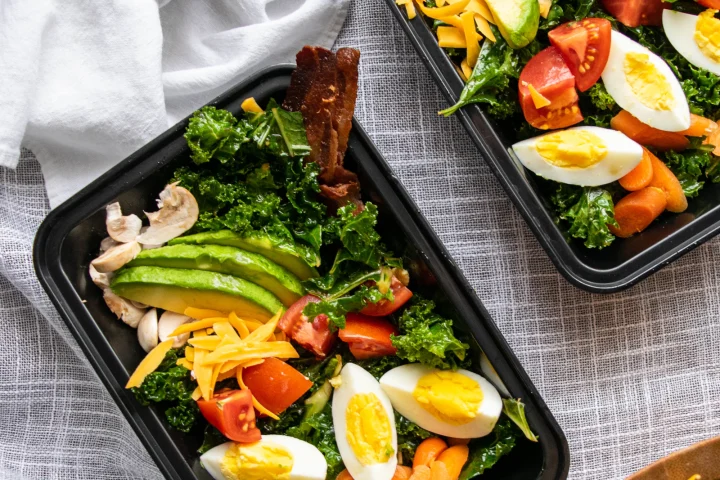
Portions are easier to judge when meals are prepared in advance. Our guides to meal prep containers and kitchen scales explain what to look for, without the hype.
Adding fiber without the bloating
Fiber supports healthy digestion, but adding a lot quickly can cause cramping, gas and loose stools. Cleveland Clinic suggests starting with soluble fiber such as oats and barley and building up slowly towards the usual adult target of around 25 to 35 grams a day. In practice that might mean oatmeal at breakfast, a banana or peeled apple, cooked carrots, and swapping white rice or bread for whole-grain versions gradually.
A gentle sample day
| Meal | Idea |
|---|---|
| Breakfast | Oatmeal made with water or skim milk, sliced banana |
| Mid-morning | Small pot of low-fat yogurt |
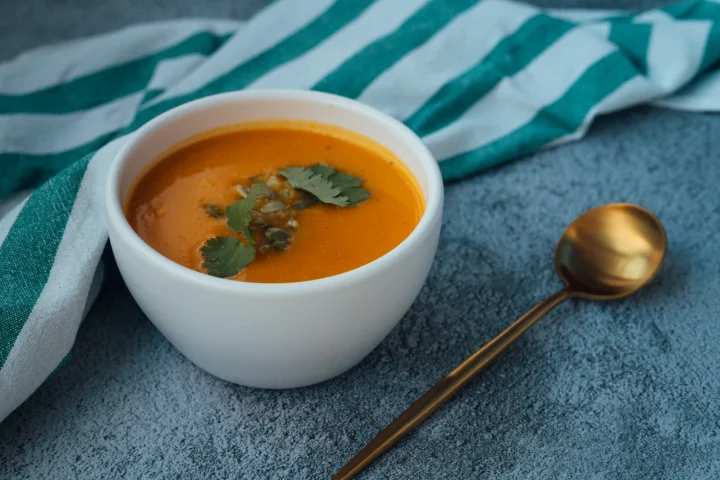
| Lunch | Chicken and rice soup with soft vegetables |
| Afternoon | Toast with a thin spread of jam, or a ripe pear |
| Dinner | Baked white fish, boiled potatoes, steamed carrots |
| Evening | A small bowl of berries or melon |
For more ideas, browse our recipes and meal ideas hub, including breakfast, lunch and dinner.
Learning what works for you
A systematic review of nine studies on diet after cholecystectomy found that simply cutting fat did not clearly improve symptoms across the board, and that the evidence for standard diets is limited. The authors concluded that personalized advice is more useful than one-size-fits-all rules. A short food diary is the easiest way to spot your own patterns, and our free Food Trigger Tracker keeps it organised on your own device.
When to get medical advice
Contact your doctor or surgical team if you have severe or worsening abdominal pain, a high temperature or chills, yellowing of the skin or eyes, persistent vomiting, or signs of a wound infection. Cleveland Clinic also lists diarrhea, constipation or being unable to pass gas that lasts more than three days after surgery. If you feel seriously unwell, seek urgent care. Our guide to when to call your doctor explains more.
Frequently asked questions
Do I have to follow a low-fat diet forever?
Not necessarily. Many people return to a normal, balanced diet. If particular fatty foods set off symptoms, it is reasonable to limit those, but a dietitian can help tailor this to you rather than cutting out whole food groups.
How long until I can eat normally?
Cleveland Clinic says most people are back to a regular diet within about a month, while some need longer-term changes. Your own timeline may differ.
Can I eat eggs or dairy?
Many people can, and some prefer lower-fat versions. See our guides on eggs and on eating normally.
Do I need supplements or medicines for digestion?
Please talk to your doctor or pharmacist before starting any supplement or medicine to manage symptoms. We do not recommend any.
Sources
- NHS: Gallbladder removal: recovery
- NIDDK: Treatment for gallstones
- Cleveland Clinic: How to change your diet after gallbladder removal
- NHS: Eat less saturated fat and 8 tips for healthy eating
- Systematic review: Dietary considerations in cholecystectomy (PubMed Central)
Keep reading
This article is part of The Gallbladder Removal Diet guide, where you will find related guides in a sensible order.
This article offers general educational information, not medical advice. Everyone's situation is different, so please talk to your doctor or dietitian about yours. If symptoms are severe, persistent or worsening, seek medical advice. Read our medical disclaimer.