How to Keep a Simple Food Diary After Gallbladder Removal
A short food and symptom diary is the easiest way to learn what suits you. Here is what to write down, how long to keep it, and how to read it.
In this guide
Short answer: a food diary is a short daily record of what you eat and drink and how you feel afterward. For one to two weeks, note the time, the food and portion, and any symptoms and when they appeared. Patterns usually become clear quickly, and the notes give your doctor or dietitian something concrete to work with. Because research suggests personalized advice works better than one-size-fits-all rules, knowing your own pattern is genuinely useful.
Key takeaways
- Record what, when, how much, and how you felt: keep it short enough that you will actually do it.
- One to two weeks is usually enough to spot patterns; longer if you are changing foods slowly.
- Change one thing at a time so you can tell what made the difference.
- Bring your diary to appointments; it helps your care team.
Why a diary helps
A recent systematic review of dietary advice after gallbladder removal found that general advice such as “cut your fat” did not clearly help everyone, and concluded that individual dietary counseling is needed. A diary is the simplest way to see your own responses. It can also reveal things that are not about fat at all, like portion size, eating speed, caffeine or a sugary drink.
What to record
| Column | What to write |
|---|---|
| Date and time | When you ate or drank |
| Food and drink | What it was, and roughly how much |
| How it was made | Fried, baked, creamy sauce, store-bought |
| Symptoms | Bloating, gas, cramps, nausea, reflux, loose stools, urgency |
| When they started | 15 minutes, 2 hours, the next morning |
| How strong | A simple 0 to 10 score |
| Other notes | Stress, poor sleep, medicines, exercise |
A simple way to start
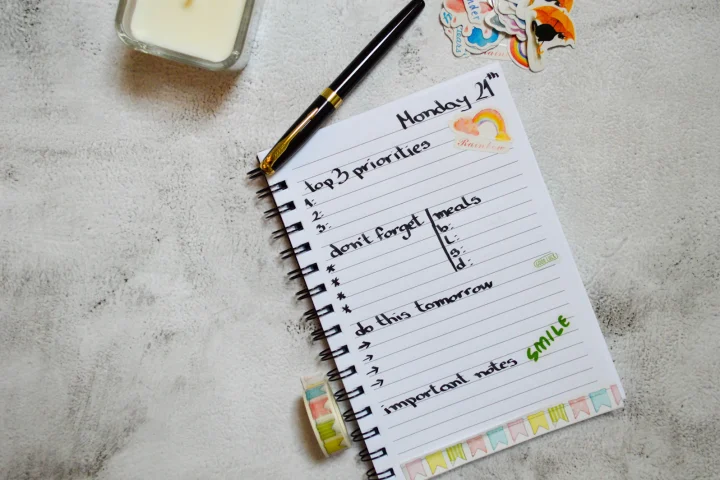
- Pick a format. A small notebook, a notes app, our free Food Trigger Tracker (which keeps data on your own device), or the printable page in our free meal planning guide.
- Write straight after eating rather than relying on memory at the end of the day.
- Add symptoms as they happen, with a rough time.
- Do not change everything at once. If you want to test a food, change one thing for a few days.
- Review weekly. Look for foods or meal sizes that often come before symptoms, and good days worth repeating.
Keep it kind
The goal is information, not perfection. A food that bothers you once may not bother you again. Look for repeated patterns, and remember that digestion often improves over weeks and months.
How to read your diary
- Look at meal size and fat together. Is it the food, or the amount?
- Check timing. Symptoms soon after a meal point to different things than symptoms the next day.
- Notice drinks. Coffee, fizzy drinks, alcohol and sugary beverages are easy to forget.
- Check for hidden ingredients, such as sugar alcohols in “sugar-free” foods.
- Mark your best days. They show what works.
Sharing it with your care team
A diary makes appointments more productive. If loose stools, bloating or pain are not settling, take your notes to your doctor or ask for a referral to a registered dietitian. Our Appointment Notes tool and Symptom Diary can print a summary. See also when to call your doctor.
Frequently asked questions
How long should I keep a food diary?
One to two weeks is usually enough to see patterns. Restart it briefly if symptoms change or you are testing new foods.
Do I have to weigh everything?
No. “Small bowl”, “one slice” or “half a plate” is fine. If you want more precision, a kitchen scale can help.
Is a paper diary or an app better?
Whichever you will use. Paper is simple and private; a digital tool can search and summarize. Our tracker stores entries only on your device.
Sources
- Systematic review: Dietary considerations in cholecystectomy (PubMed Central)
- Cleveland Clinic: How to change your diet after gallbladder removal
Keep reading
This article is part of Start Here: the beginner's path, where you will find related guides in a sensible order.
This article offers general educational information, not medical advice. Everyone's situation is different, so please talk to your doctor or dietitian about yours. If symptoms are severe, persistent or worsening, seek medical advice. Read our medical disclaimer.