Foods to Limit After Gallbladder Removal (and Why)
There is no single banned-food list, but some foods cause more trouble than others. Here is what many people limit, why, and gentler swaps to try.
In this guide
Short answer: there is no official list of foods you must never eat after gallbladder removal. The foods people most often find difficult are high in fat, such as fried food, fatty meats, rich sauces, pastries and full-fat dairy. Large portions, alcohol, caffeine and very spicy dishes bother some people too. It helps to go slowly, change one thing at a time, and notice what your own body tells you.
Key takeaways
- Fatty, fried and greasy foods are the most commonly reported triggers.
- Portion size matters as much as the food itself: a smaller portion of a rich food is often easier than a large one.
- Research on strict low-fat diets after surgery is mixed, so treat “limit” as “go gently and see”, not “never again”.
- Gentler swaps (grilling instead of frying, reduced-fat dairy, tomato-based sauces) let you keep eating foods you enjoy.
- Persistent symptoms deserve a conversation with your doctor or a dietitian.
Why fat is the usual suspect
Bile helps your body digest fat. After gallbladder removal, bile reaches the intestine in a steady trickle rather than a larger release at mealtimes. Cleveland Clinic explains that a very fatty meal can be harder to handle for some people, leading to loose stools, cramps or bloating while the body adjusts.
It is worth being honest about the evidence, though. A recent systematic review of nine studies on diet after cholecystectomy found that foods such as processed meats, full-fat cheese, fried fatty foods and rich sauces were linked with more symptoms, but that simply cutting overall fat did not clearly improve outcomes for everyone. The authors called for personalized advice. In other words, a short list of “problem foods” can help, but your own pattern matters most.
Foods people commonly limit, and gentler swaps
| Often limited | Why some people limit it | A gentler swap |
|---|---|---|
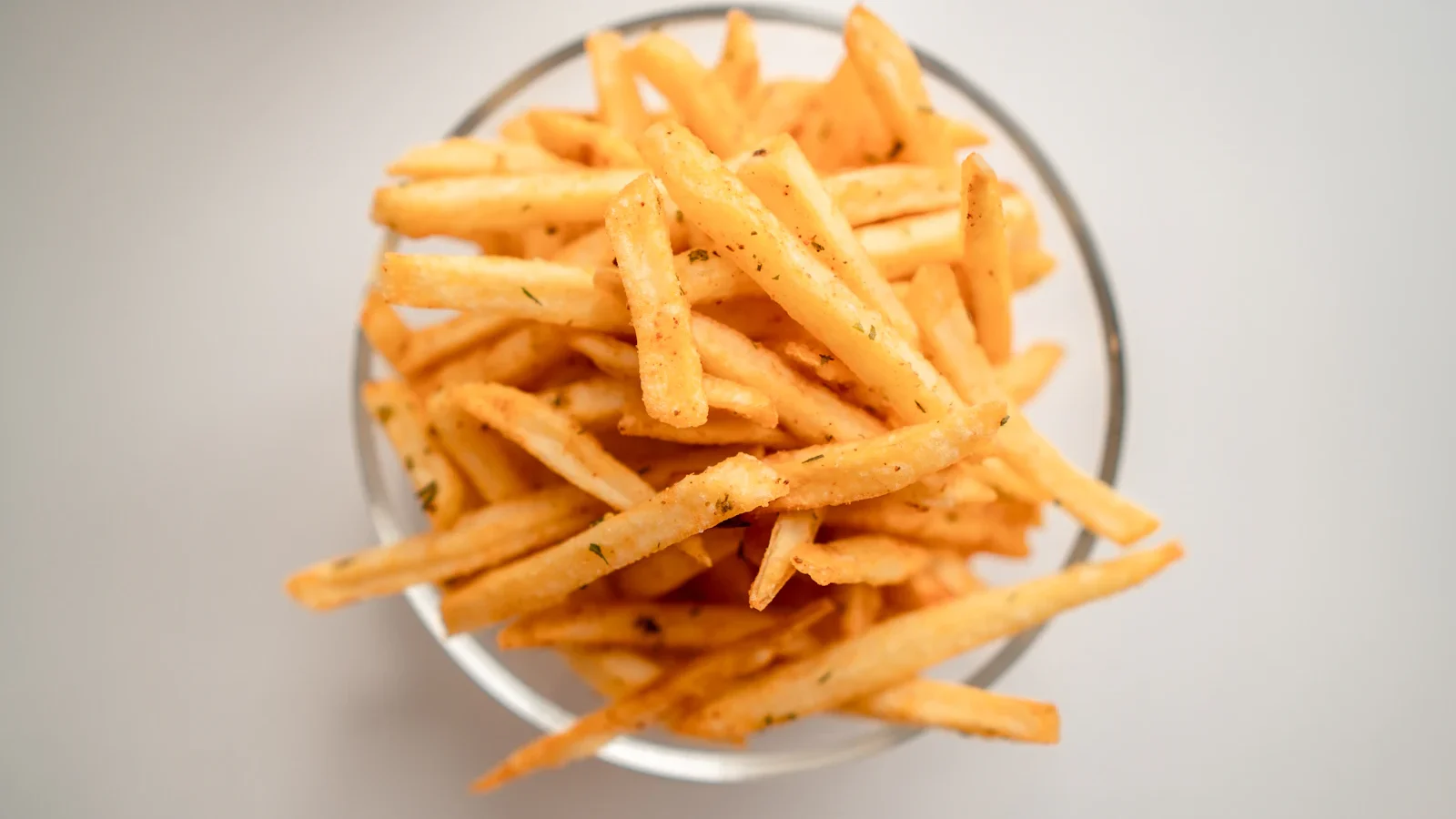
| Fried foods (french fries, fried chicken, donuts) | Very high in fat, which can be harder to digest in one go. | Oven-baked, grilled or air-fried versions with little oil. |
| Fatty or processed meats (bacon, sausage, salami, fatty cuts) | High in fat; the review above linked processed meats with more symptoms. | Skinless chicken or turkey, lean cuts, white fish. |
| Creamy sauces and rich gravies | Cream, butter and oil can add a lot of fat quickly. | Tomato-based or stock-based sauces, a little yogurt instead of cream. |
| Full-fat dairy and rich cheese | Higher in saturated fat per serving. | Skim or reduced-fat milk and yogurt, smaller amounts of strongly flavored cheese. |
| Pastries, cakes, cookies, pizza | Often combine fat and refined carbohydrates in large portions. | Plain toast or English muffins, a plain scone with jam, a small portion. |
| Very large meals | A big portion of anything can overwhelm digestion while it adjusts. | Four to six smaller meals through the day. |
| Spicy food | Cleveland Clinic notes spicy foods can irritate the digestive tract in some people. | Herbs, lemon, garlic or mild spices for flavor. |
| Alcohol and heavy caffeine | Can upset digestion; Cleveland Clinic suggests waiting before reintroducing alcohol. | Water, herbal tea, decaf. See our guides on coffee and alcohol. |
What about “healthy” fats?
Olive oil, avocado, nuts and fatty fish are generally considered good for overall health, and plenty of people tolerate small amounts once they have recovered. The key word is small. Try a teaspoon of oil rather than a splash, a few nuts rather than a handful, and see how you feel. The NHS suggests measuring oil with a teaspoon or using an oil spray, which makes portions easy to control.
How to reintroduce foods calmly
- Wait until you are comfortable with everyday foods first.
- Add one food at a time, in a small portion, and wait a day or two before judging it.
- Note what you ate and how you felt. A simple food diary makes patterns obvious, and the free Food Trigger Tracker can keep it for you.
- Try again later. A food that bothered you in week two may be fine in month two.
Reading labels
The US Food and Drug Administration says that 5% Daily Value or less of a nutrient per serving is considered low, and 20% or more is considered high. Checking “Total Fat” per serving, and the serving size itself, makes comparing products much easier. Our fat-per-meal calculator helps you add it up.
Eating out without stress
Menus are full of fried and creamy dishes, but there is almost always a gentler option. Grilled or baked proteins, sauces on the side and shared desserts all help. We have more in eating out after gallbladder removal.
When to get medical advice
Loose stools that go on for more than a few days, severe or worsening pain, fever, yellowing of the skin or eyes, blood in your stool or persistent vomiting need medical attention. See when to call your doctor.
Frequently asked questions
Can I ever eat fried food again?
Many people can, in small amounts, once they have adjusted. Start with a small portion of something lightly fried and see how you feel. If it causes symptoms, a baked or air-fried version may suit you better.
Is a low-fat diet required for life?
Not for everyone. The research is mixed, and many people go back to a balanced diet. Persistent trouble with certain foods is worth discussing with a dietitian.
Do I need to avoid high-fiber foods?
Not permanently. Cleveland Clinic suggests introducing fiber gradually, because adding a lot quickly can cause gas and loose stools. Start with soluble fiber such as oats.
Sources
- Cleveland Clinic: How to change your diet after gallbladder removal
- Systematic review: Dietary considerations in cholecystectomy (PubMed Central)
- NHS: Eat less saturated fat
- US FDA: How to understand and use the Nutrition Facts label
Keep reading
This article is part of The Gallbladder Removal Diet guide, where you will find related guides in a sensible order.
This article offers general educational information, not medical advice. Everyone's situation is different, so please talk to your doctor or dietitian about yours. If symptoms are severe, persistent or worsening, seek medical advice. Read our medical disclaimer.